
Overview
This help explains how to translate WPResidence with the Loco Translate plugin from WordPress admin.
Some text comes from the theme, some text comes from the WPResidence Core plugin, and some labels are managed directly from Theme Options, taxonomies, custom fields, menus, widgets, or Elementor templates.
Before You Start: Language, File Name, and Location
Before translating, check the WordPress site language.
Go to:
Settings > General > Site Language
WordPress loads translation files based on this language.
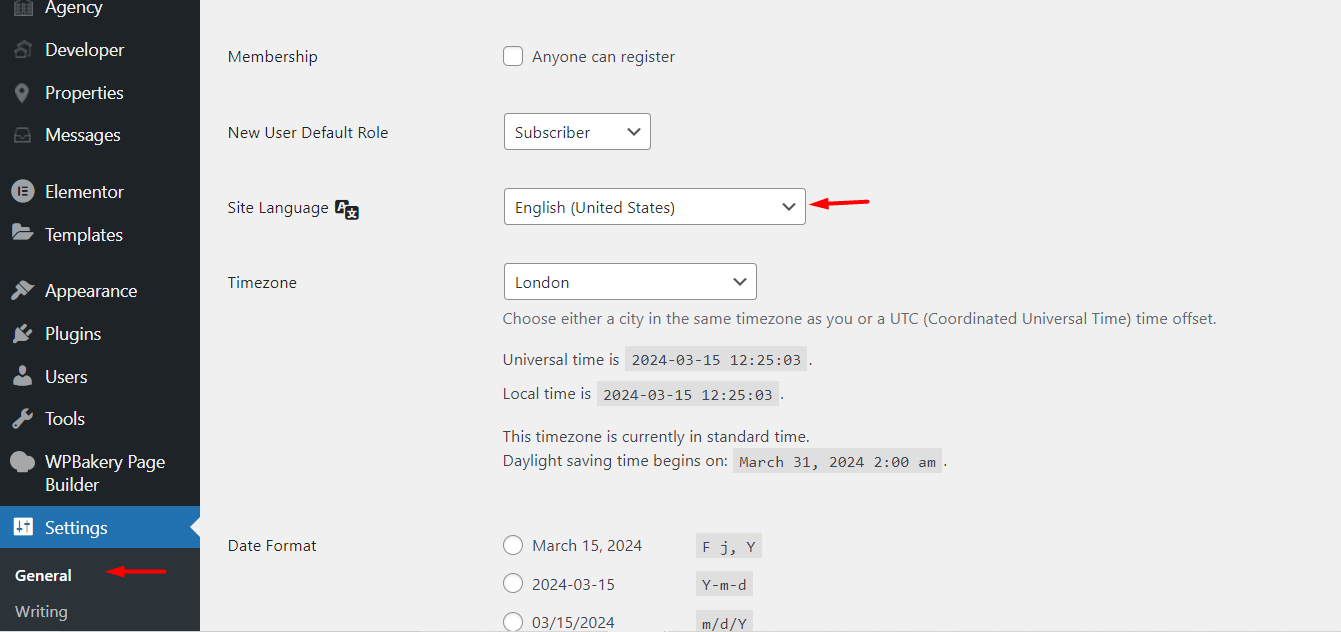
The translation file name must match the WordPress language code.
Example for Italian:
- it_IT.po
- it_IT.mo
If the file name is different, WordPress will not load the translation on the front end, even if the strings are translated in Loco Translate.
Theme translation files
For theme strings, the recommended location is:
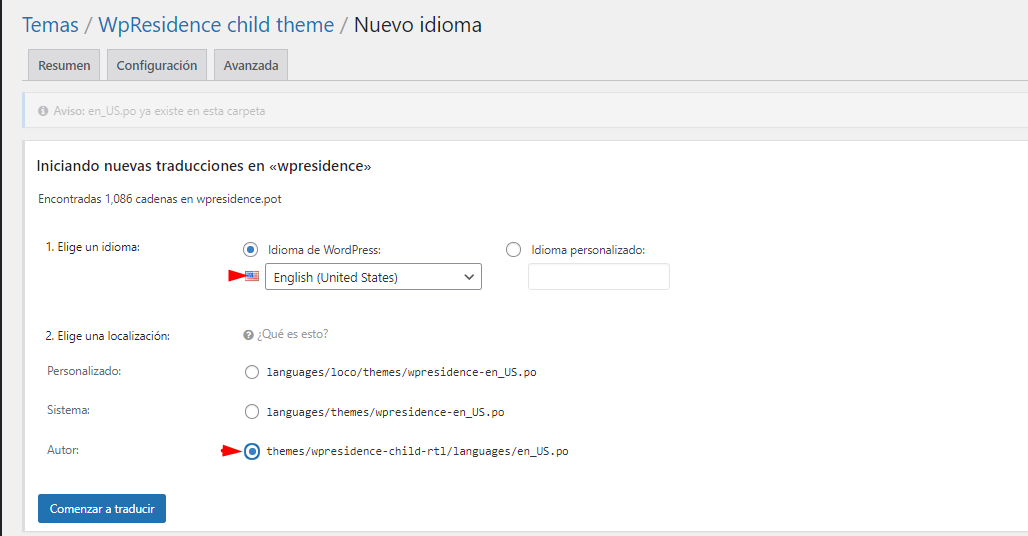
wp-content/themes/wpresidence-child/languages/
Example for Italian:
- wp-content/themes/wpresidence-child/languages/it_IT.po
- wp-content/themes/wpresidence-child/languages/it_IT.mo
WPResidence Core plugin translation files
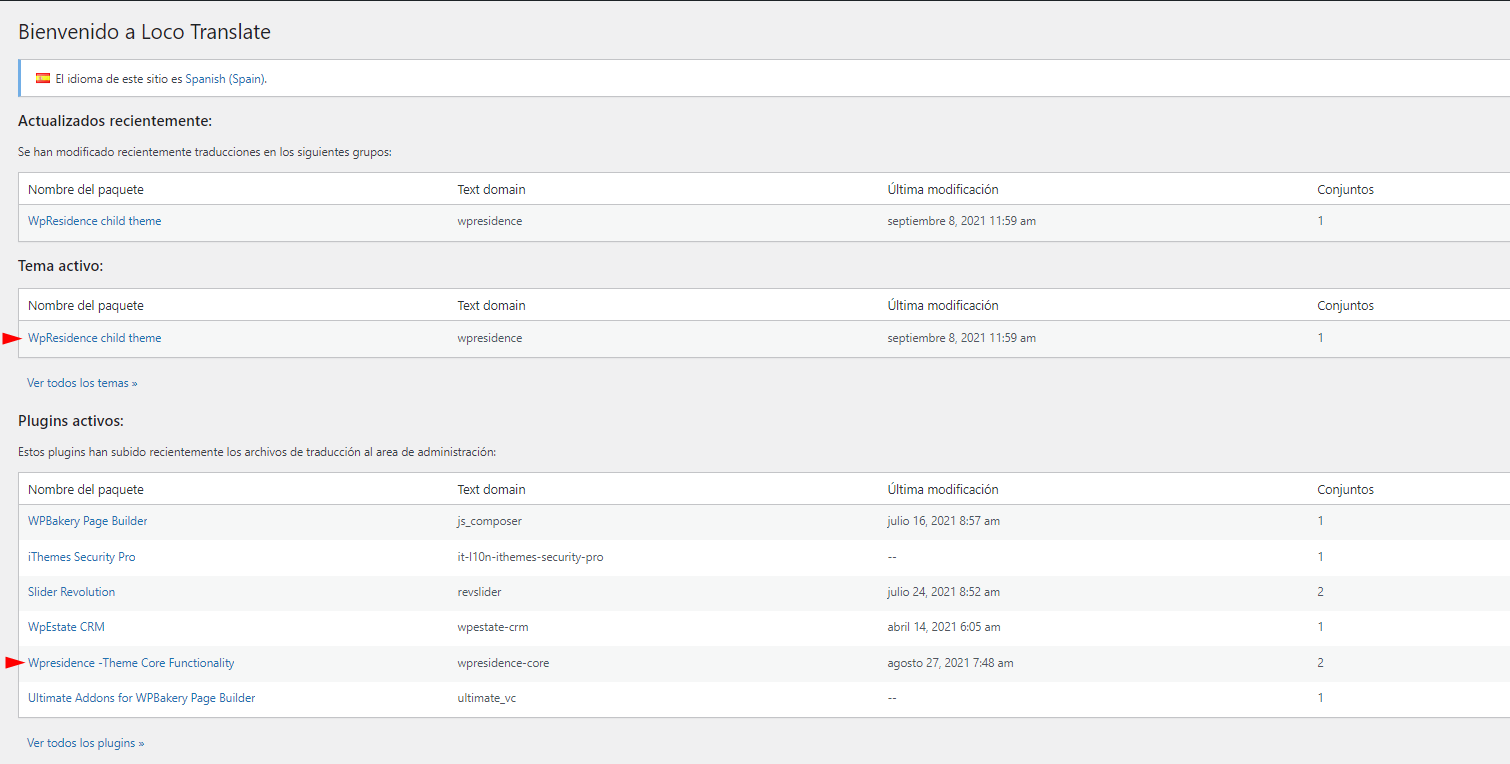
Some strings are part of the WPResidence Core plugin. For these strings, translate the core plugin file from Loco Translate.
Example for Italian:
- wpresidence-core-it_IT.po
- wpresidence-core-it_IT.mo
Where to Translate Each Type of Text
| Text location | Where to translate or edit it |
|---|---|
| Theme layout text, buttons, default messages, and interface labels | Loco Translate > Themes > WPResidence Child Theme |
| Dashboard, submission, login, user, agent, agency, developer, or core functionality text | Loco Translate > Plugins > WPResidence Core |
| Labels saved in Theme Options | Edit the label directly in the matching Theme Options section. |
| Property categories, action categories, cities, areas, statuses, features, or taxonomy terms | Edit them directly from the WordPress admin area where they were created. |
| Property custom field labels | Theme Options > General > Property Custom Fields |
| Advanced Search field labels | Theme Options > Search > Advanced Search Form |
| Menu item labels | Appearance > Menus |
| Widget titles | Appearance > Widgets |
| Elementor or Studio template text | Edit the text directly inside Elementor. |
Install and Activate the Child Theme
The WPResidence Child Theme is recommended for theme translations because it helps keep translations safer during theme updates.
How to install the Child Theme
Recommended theme translation location:
wp-content/themes/wpresidence-child/languages/
Translate Theme Strings With Loco Translate
Use this section for text that comes from the WPResidence theme.
Install Loco Translate
- Go to Plugins > Add New.
- Search for Loco Translate.
- Install and activate the plugin.
[https://wordpress.org/plugins/loco-translate/](https://wordpress.org/plugins/loco-translate/)
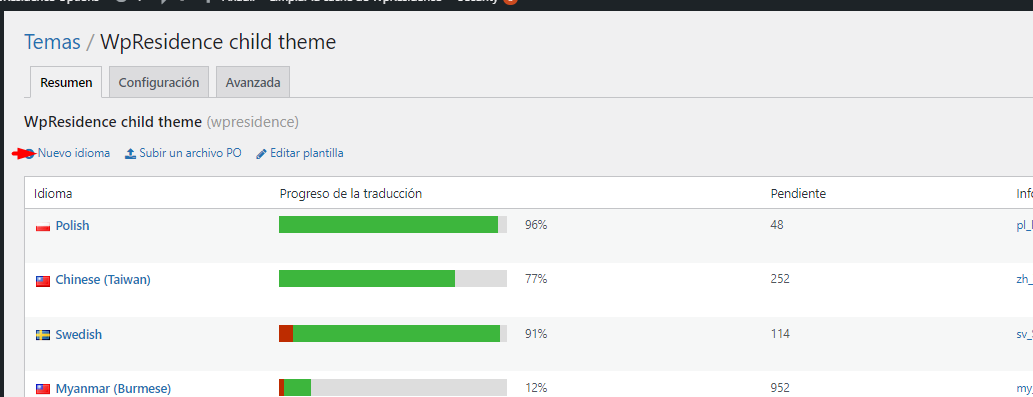
Create or edit the theme language file
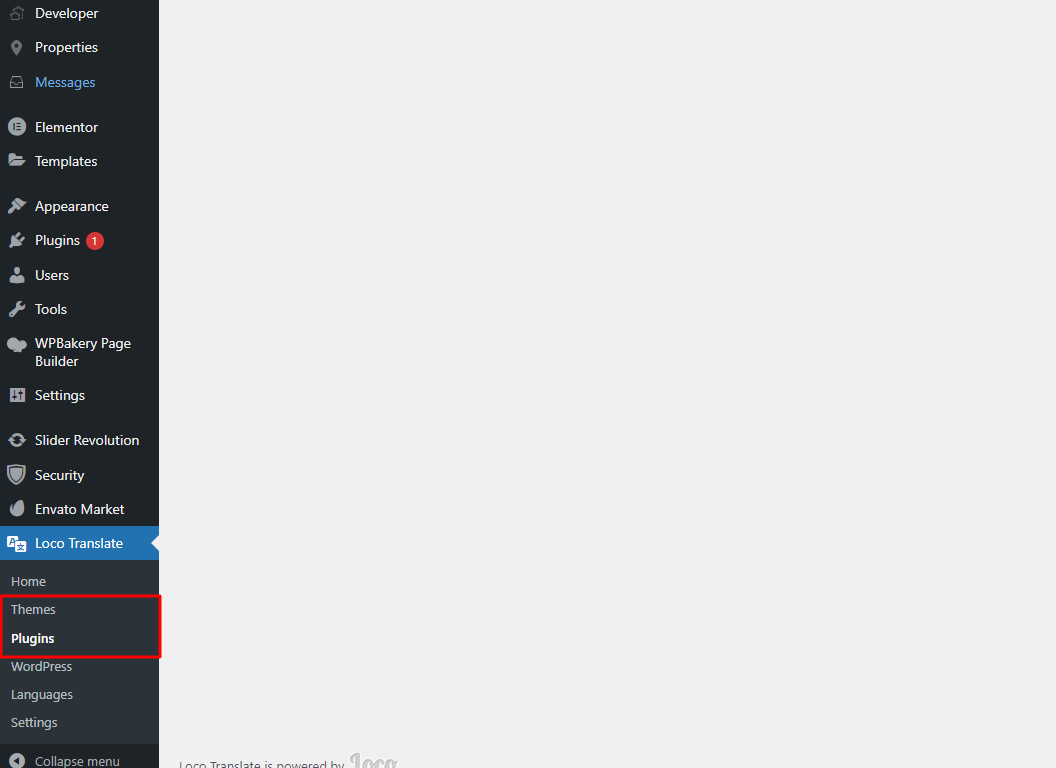
- Go to Loco Translate > Themes.
- Select WPResidence Child Theme.
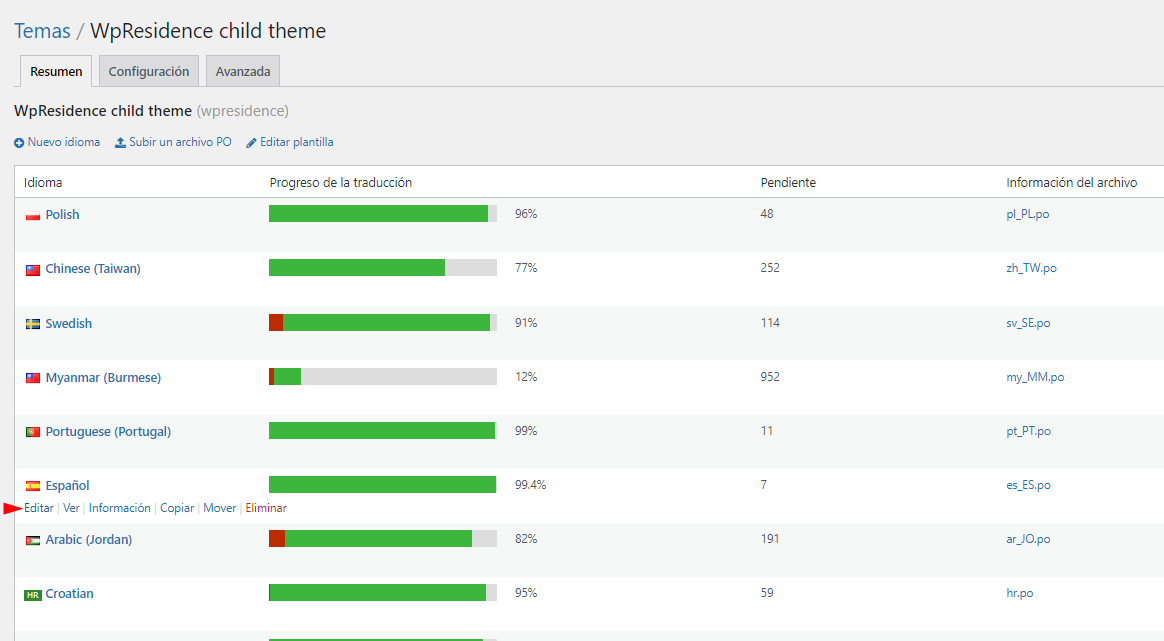
- Create a new language or edit the existing language file.
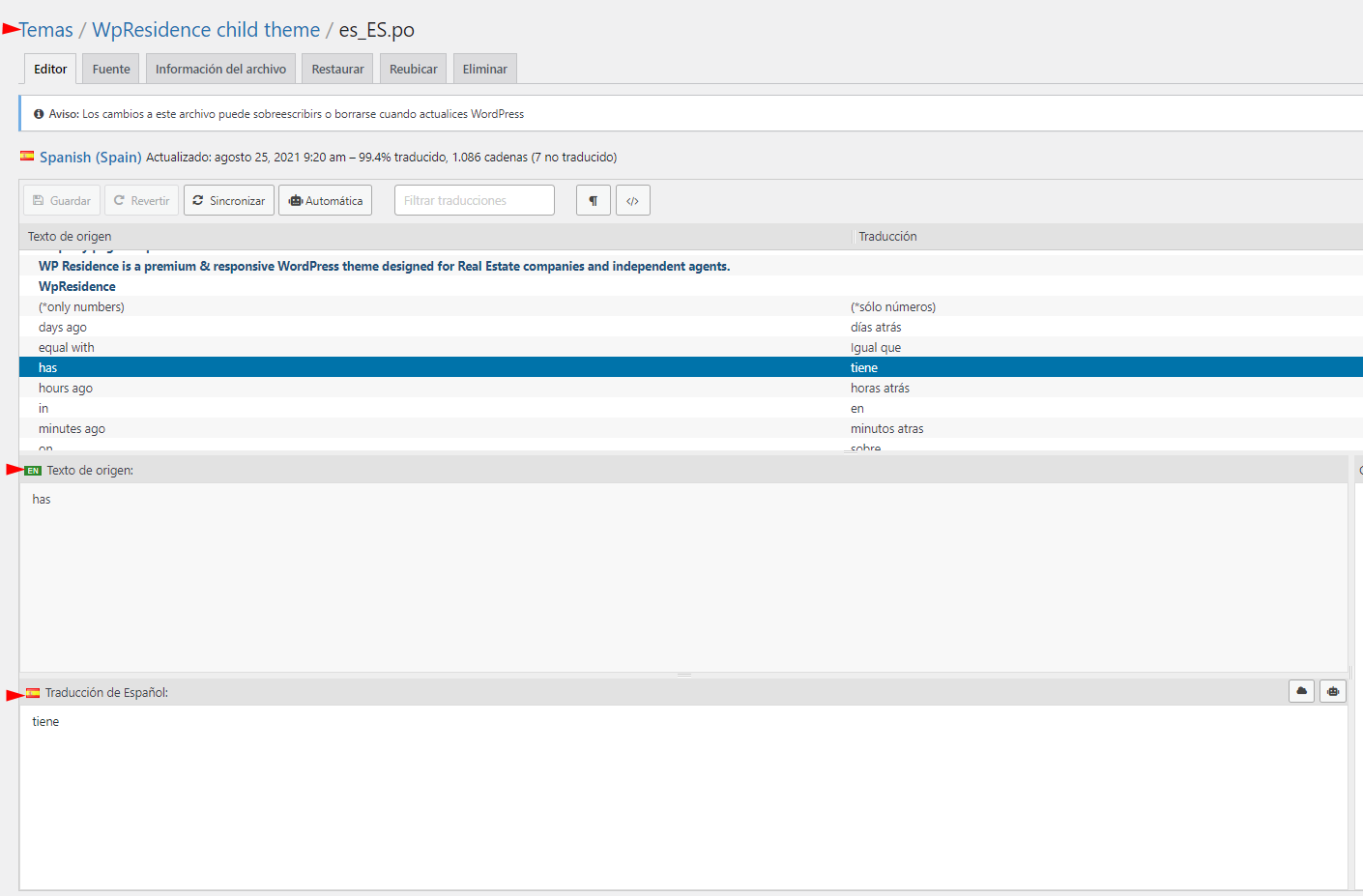
- Make sure the file name matches the WordPress site language, for example it_IT.po for Italian.
- Click Sync if needed.
- Search for the string, add the translation, and click Save.
Translate WPResidence Core Plugin Strings
Some strings are inside the WPResidence Core plugin, not in the theme language file.
- Go to Loco Translate > Plugins.
- Select WPResidence Core.
- Create a new language or edit the existing language file.
- For Italian, the files should be named wpresidence-core-it_IT.po and wpresidence-core-it_IT.mo.
- Click Sync if needed.
- Search for the string, add the translation, and click Save.
Texts Managed Outside Loco Translate
Some labels are not translated from .po files. They must be edited where they were added.
Theme Options labels
Some labels are managed from Theme Options, for example property page labels or search labels.
Common locations:
- Theme Options > Property Page > Listing Labels
- Theme Options > Search > Advanced Search Form
- Theme Options > General > Property Custom Fields
Property single page labels
Labels for property detail sections, such as Property Details, Address, and Features, can be edited from:
Theme Options > Property Page > Listing Labels

Property categories and taxonomy terms
Property categories, action categories, cities, areas, statuses, and features are managed directly in wp-admin.
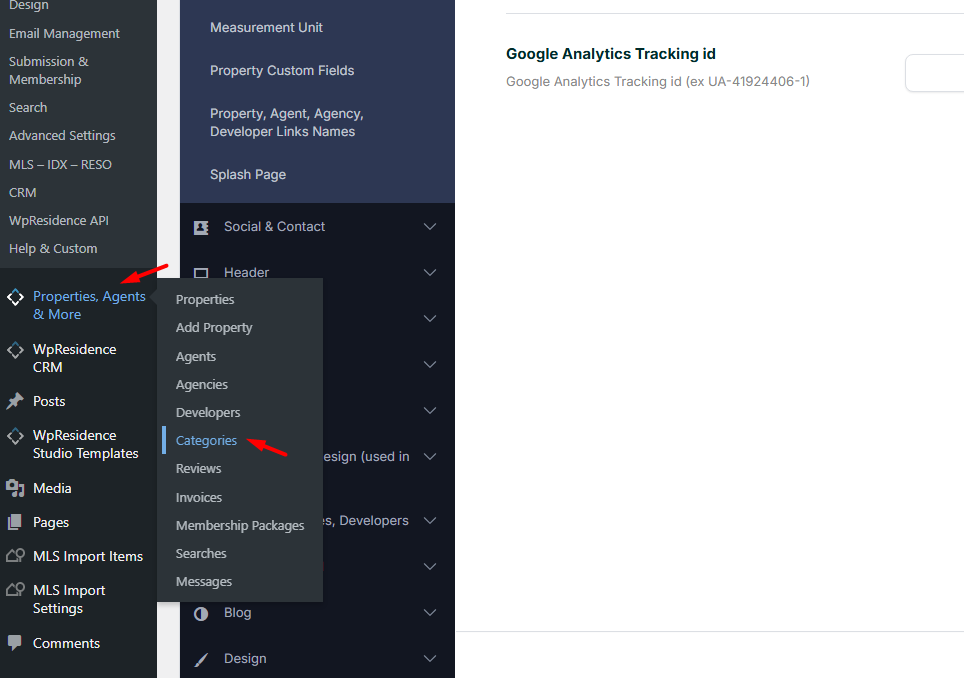
Go to:
Properties, Agents & More > Categories
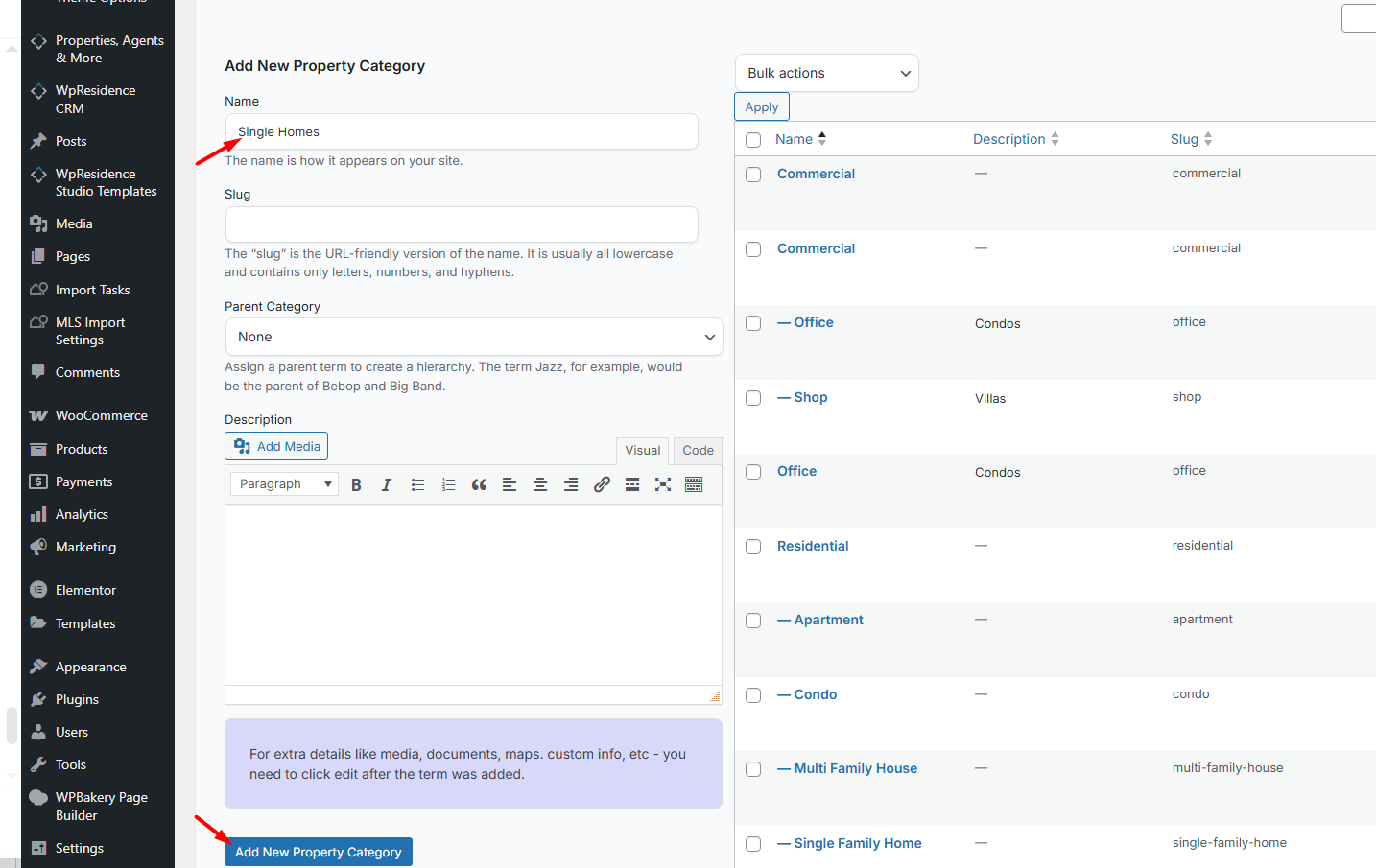
Add or edit a taxonomy term
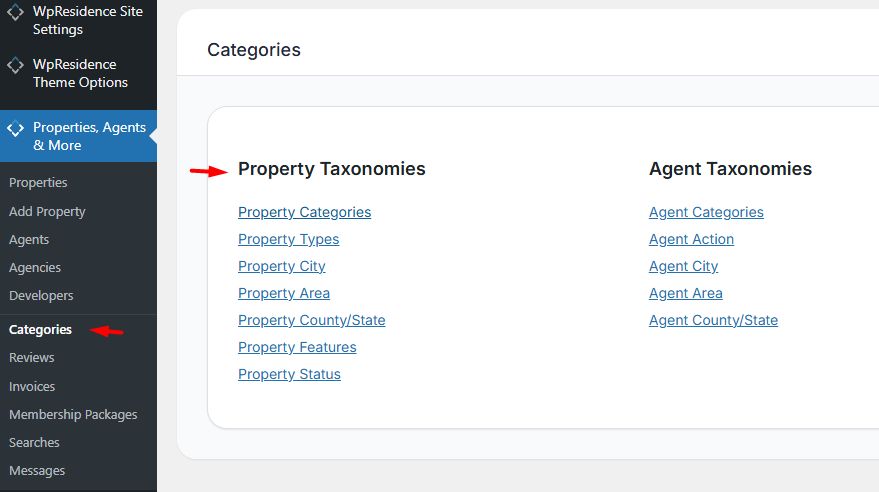
- Go to Properties, Agents & More > Categories.
- Select the taxonomy type you want to manage, such as Category, Action Category, City, Area, Status, or Features.
- Enter or edit the Title.
- Leave Slug empty if you want WordPress to generate it automatically.
- Click the add or update button.
Custom field labels
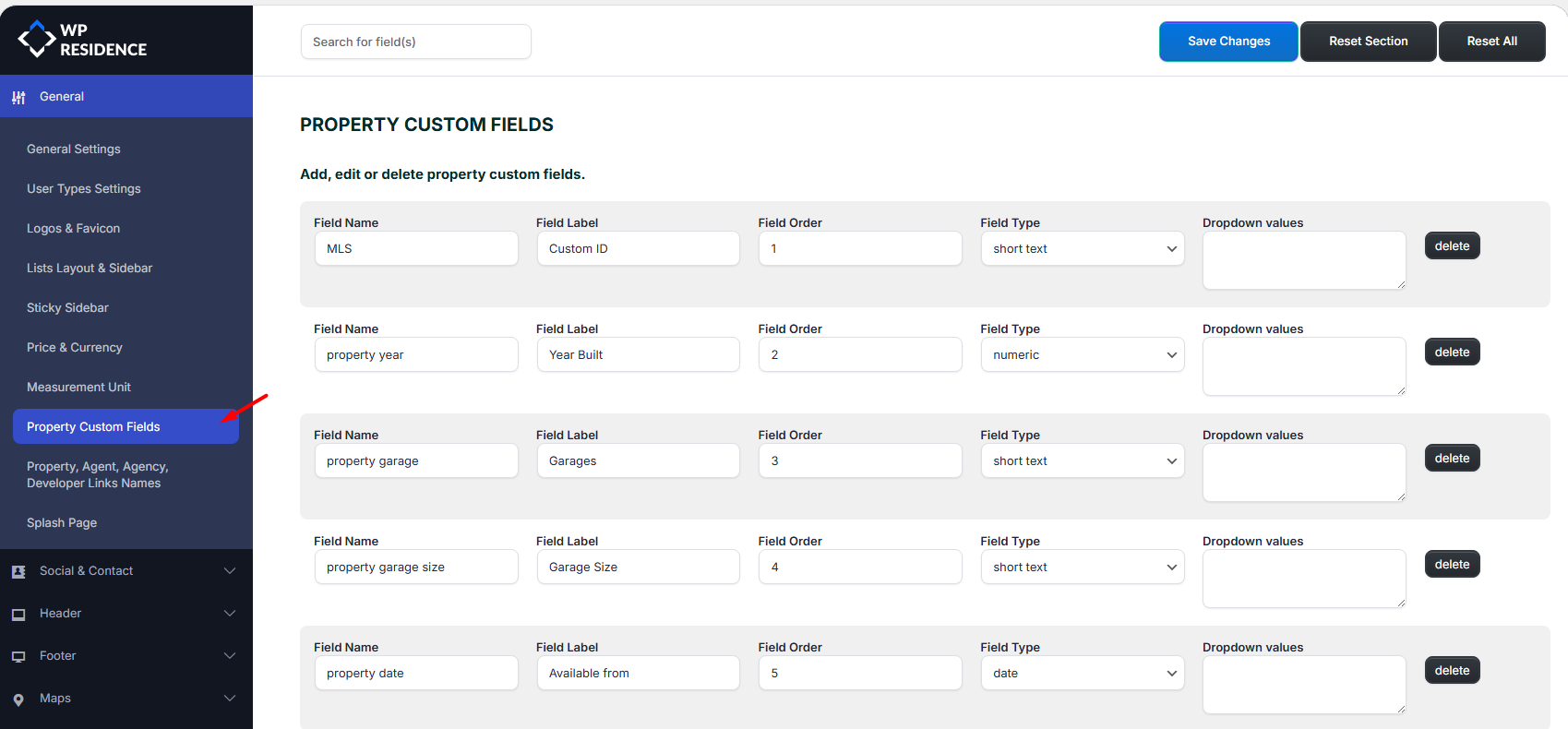
Property custom fields are created and managed from:
Theme Options > General > Property Custom Fields
Add the Field Label for each custom field directly in this area, in your language.
Advanced Search labels
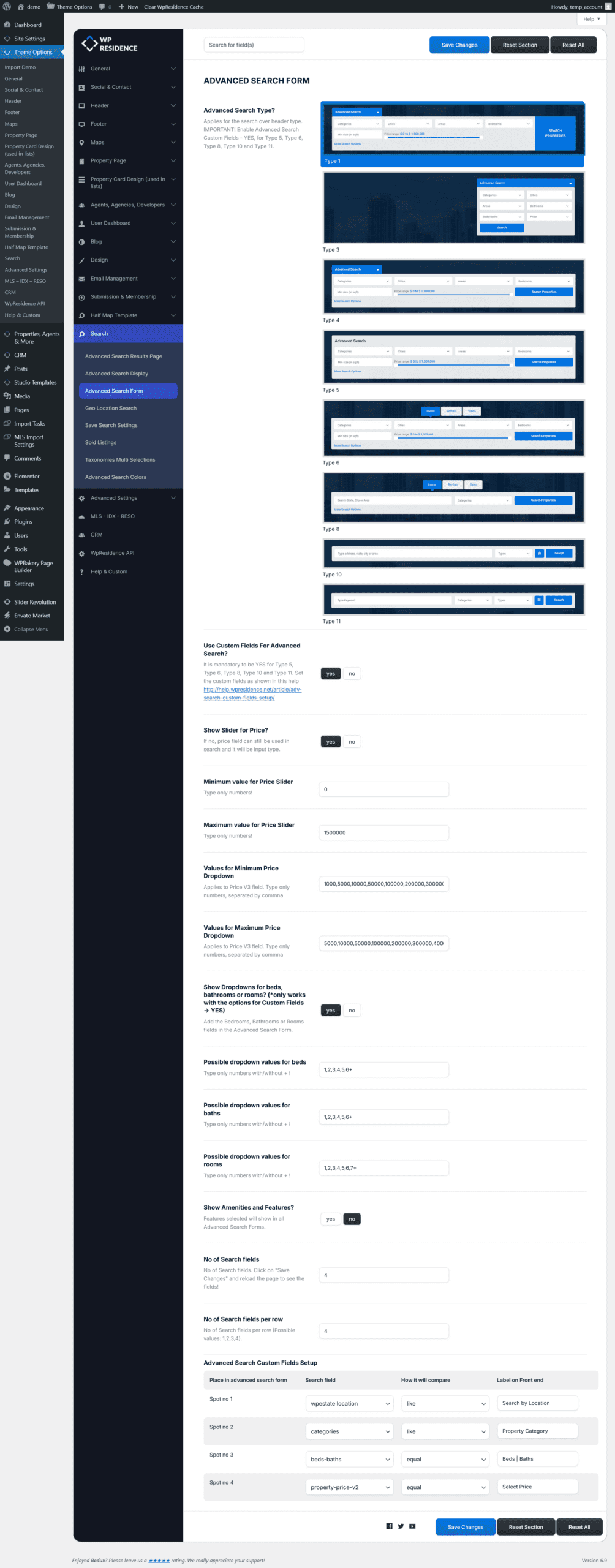
Advanced Search labels are managed from:
Theme Options > Search > Advanced Search Form
Change the Label on Front End in your language for each field you select.
Main menu items
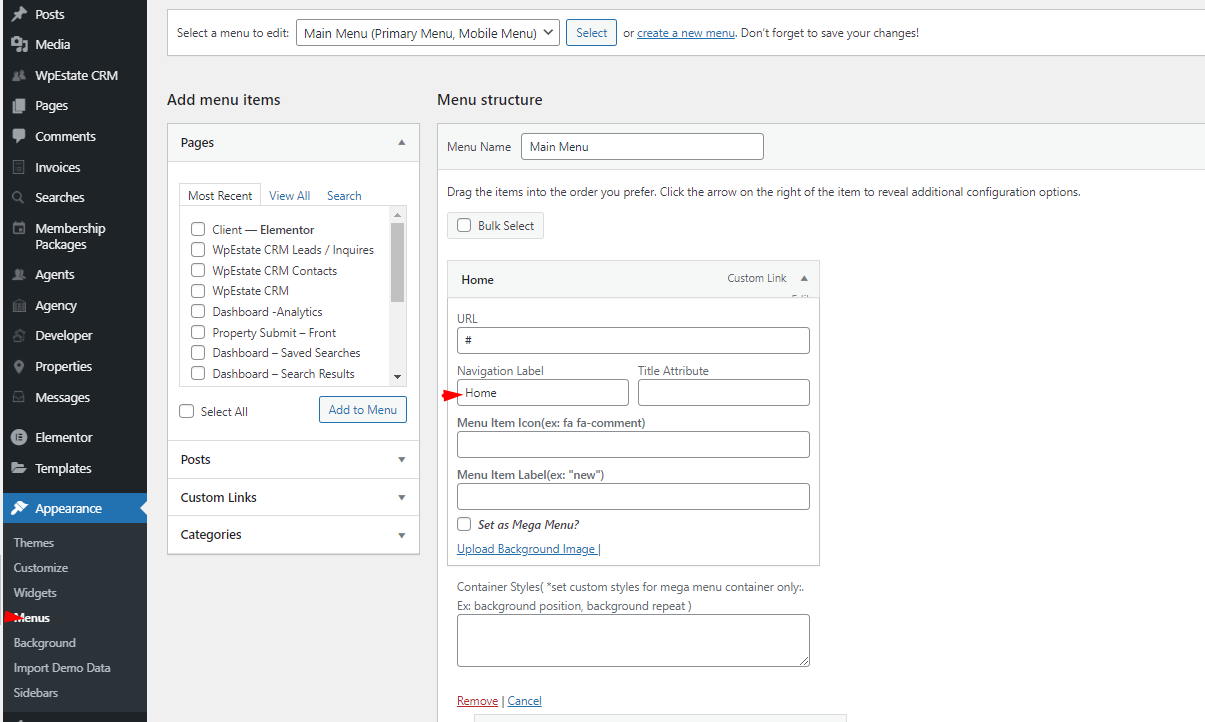
Menu item labels are edited from:
Appearance > Menus
Widget titles
Widget titles are edited directly from:
Appearance > Widgets
Open the widget, change the Title, and save.
Elementor and Studio template text
If the text was added inside an Elementor or Studio template, edit the template with Elementor and change the text directly there.
Update Translations After Theme or Plugin Updates
After a theme or plugin update, new strings may be added.
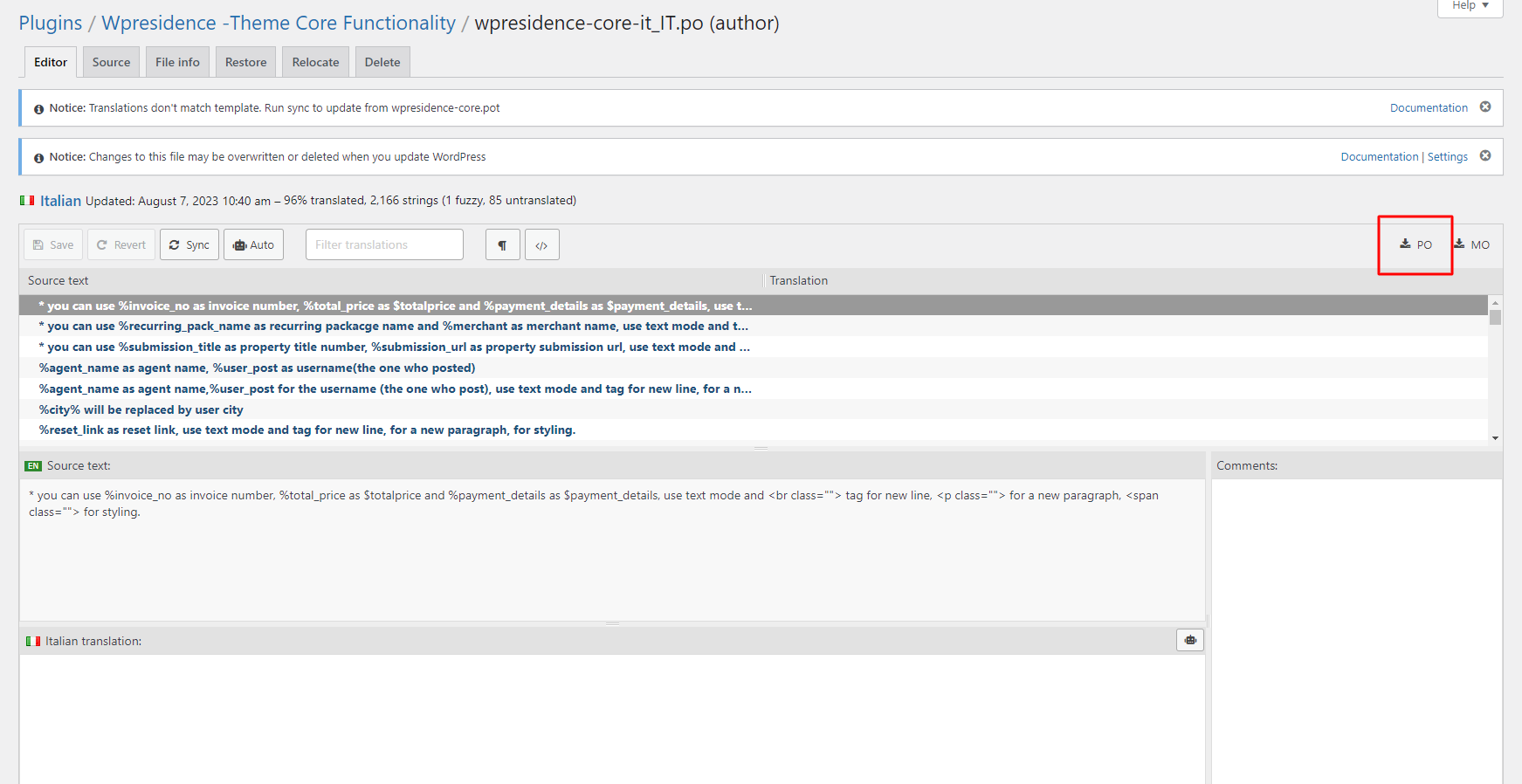
- Open the child theme language file in Loco Translate and click Sync.
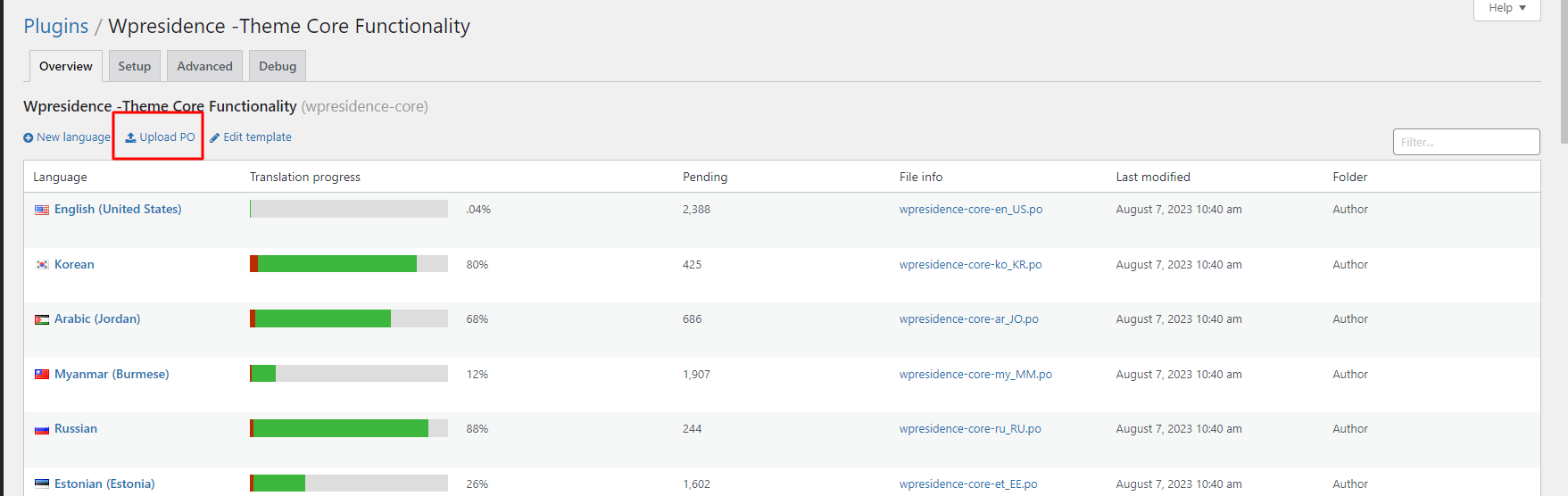
- Open the WPResidence Core plugin language file in Loco Translate and click Sync.
- Translate any new strings.
- Click Save.
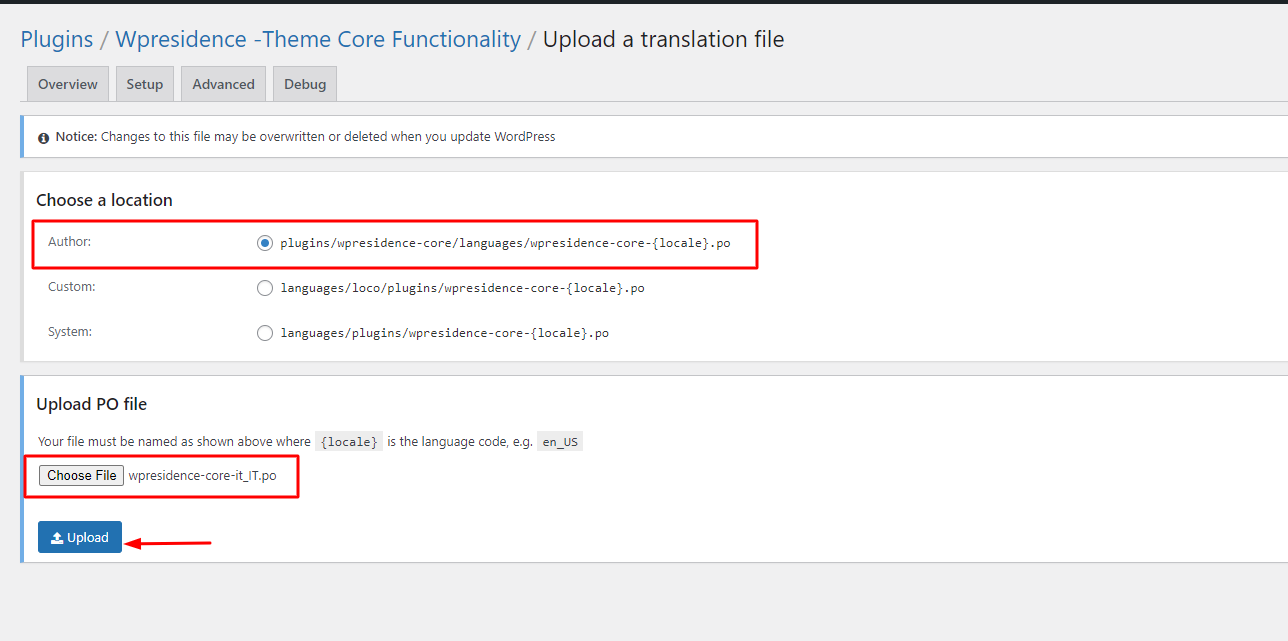
Before updating, download a backup of your custom language files if they are stored inside the theme or plugin folders.
How to update the .po translation after a theme update
Translate User Role Labels
WPResidence user role labels, such as User, Agent, Agency, and Developer, can be translated with Loco Translate.
If you cannot find a role label in the theme translation file, check the WPResidence Core plugin translation file as well.
Multi-Language Websites With WPEstate Translate
Loco Translate translates the theme and plugin texts for the site language. For a site in several languages with a language switcher, use the WPEstate Translate plugin. The two work together:
- Main language: set it in Settings > General > Site Language and translate its texts with Loco Translate, as shown above. Labels saved in Theme Options are typed in the main language.
- Other languages: add them in WPEstate Translate > Languages. Their texts come from the .po files of each language, for example pt_BR.po in the child theme and wpresidence-core-pt_BR.po. In WPEstate Translate > Theme & Plugins Strings you check those translations, fill in what is missing and translate the Theme Options labels, then click Generate translation files.
- Pages, properties, agents, categories and menus are translated with WPEstate Translate, not with Loco Translate.
Full guide: Multi Languages with WPEstate Translate. For the strings screen: Translating Theme and Plugin Strings.
Translations Are Saved, but the Front End Still Shows English
If a translated string does not show on the front end, check these points:
- Check Settings > General > Site Language.
- Check that the language file name matches the site language, for example it_IT.po and it_IT.mo for Italian.
- Check that the .mo file exists after saving.
- Check both the theme language file and the WPResidence Core plugin language file.
- Click Sync in Loco Translate after updates.
- Check if the text is managed from Theme Options, widgets, taxonomies, custom fields, menus, or Elementor.
- Clear all cache after saving translations.