
How to create property custom fields
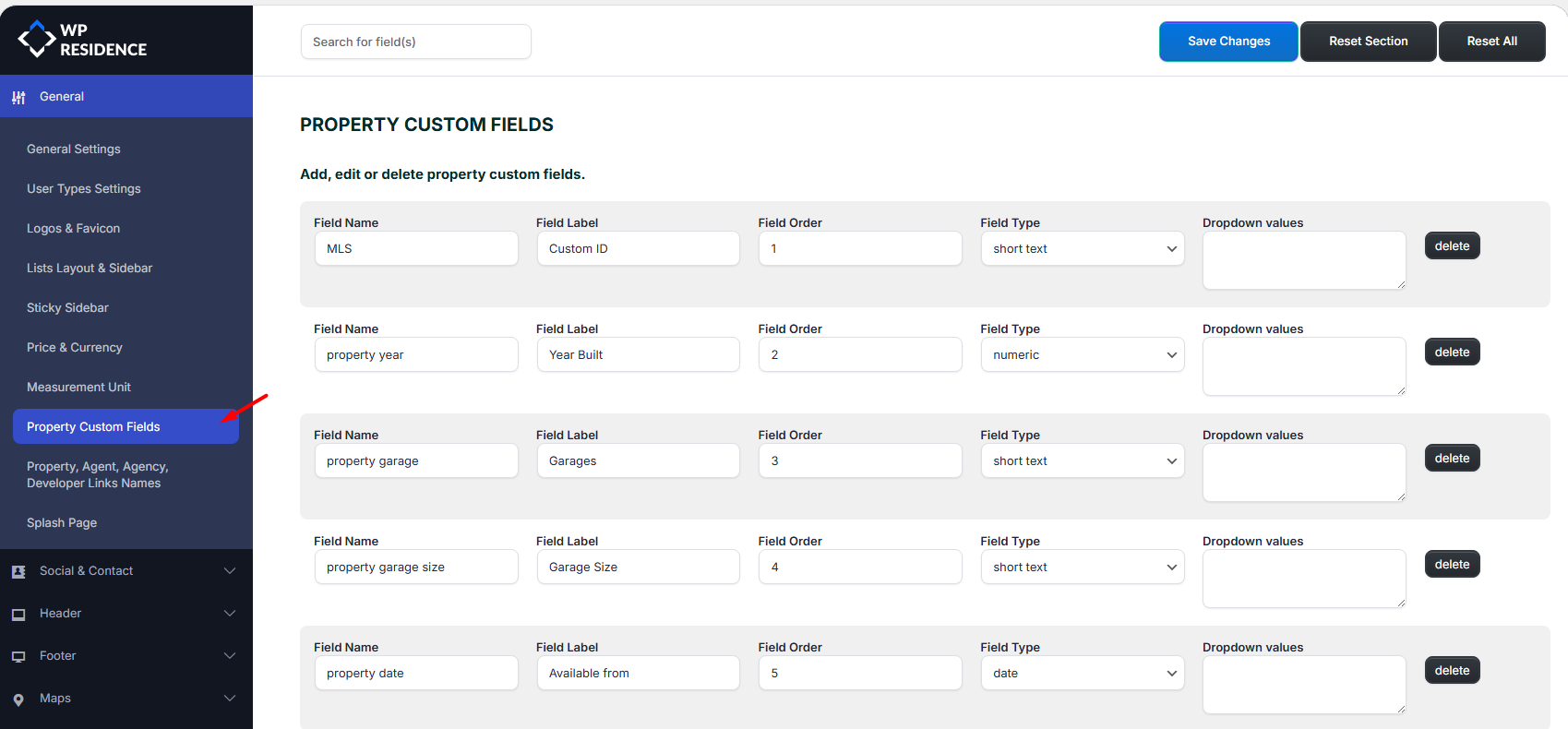
Property custom fields are created and managed from
Theme Options → General → Property Custom Fields.
These fields allow you to store and display additional structured information for each property, beyond the default fields provided by the theme.
You can create the following field types:
- Short text or Long text
- Numeric
- Date
- Dropdown
Each custom field includes:
- Field Name – internal identifier (must be unique, no spaces)
- Field Label – text displayed on the frontend
- Field Order – controls display order across the site
- Field Type – text, numeric, date, or dropdown
- Dropdown values – required only for dropdown fields
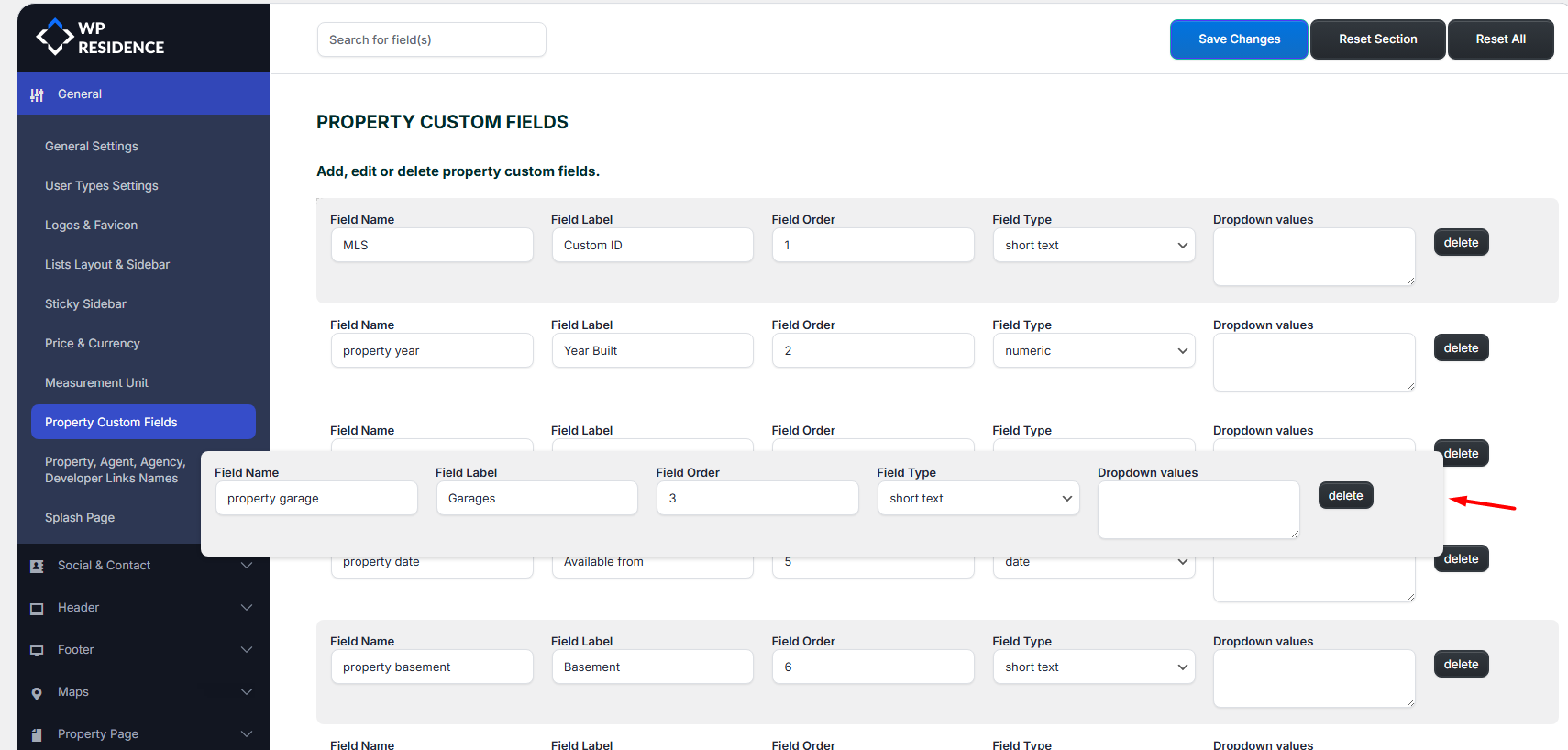
Starting with version 5.2.0, custom fields can be reordered using Drag & Drop. The order set here affects how fields are displayed everywhere they are used.
How to add and fill in custom fields when editing a property in wp-admin
After you create custom fields in Theme Options → General → Property Custom Fields, the next step is to actually fill in values for each listing.
Go to Properties → All Properties and click Edit on a listing (or create a new property).
In the property edit screen, scroll down to the property details areas.

Note for Elementor users: If you are using Elementor templates to build property pages, make sure your template includes the section widget for details or the widgets that show dynamic fields. Theme Options controls the classic output; Elementor templates can override what is displayed.
How property custom fields are displayed on the property page
Once created and filled in for a property, custom fields are displayed on the
Property Page, inside the Property Details section.
They appear after the default property fields:
- Property ID
- Price
- Property Size
- Property Lot Size
- Rooms
- Bedrooms
- Bathrooms
Custom fields are displayed only if a value is saved for that property.
If a field has no value, it will not appear on the frontend.

Special note: Year Built and Garages custom fields
In WPResidence, Year Built and Garages are handled as Property Custom Fields.
They are not hardcoded fields, but the theme includes internal logic that recognizes them when the following Field Names are used exactly:
- property year
- property garage
How these fields are created and managed
- They are created in Theme Options → General → Property Custom Fields.
- Values are added inside each individual property listing.
- If no value is saved, the field will not display anywhere.

How they display on the frontend
Property page – They are displayed in the Property Details section as all custom fields
Overview section in the default property layouts – Year Built and Garages can appear automatically in the overview section used by the 7 Default Property Page Layouts.

Important:
- For fields to show in the Overview section, the Field Name must remain exactly property year and property garage.
- You may change the Field Label, but do not change the Field Name.
You can restore them by creating new custom fields using the exact same Field Names.
Once recreated, they will automatically appear again in supported overview sections and property details.
How to use custom fields in Property Card Units (lists)
Property Card Units control how properties are displayed in list-based views such as:
- Advanced Search Results
- Property category and taxonomy pages
- Properties List pages
- Half Map layouts
Card Units are managed from
Theme Options → Property Card Design (used in lists).

For full details about available card units and supported fields, see:
Default Property Card Units – How they work and what they display
How to add property custom fields to the front end submit listing form
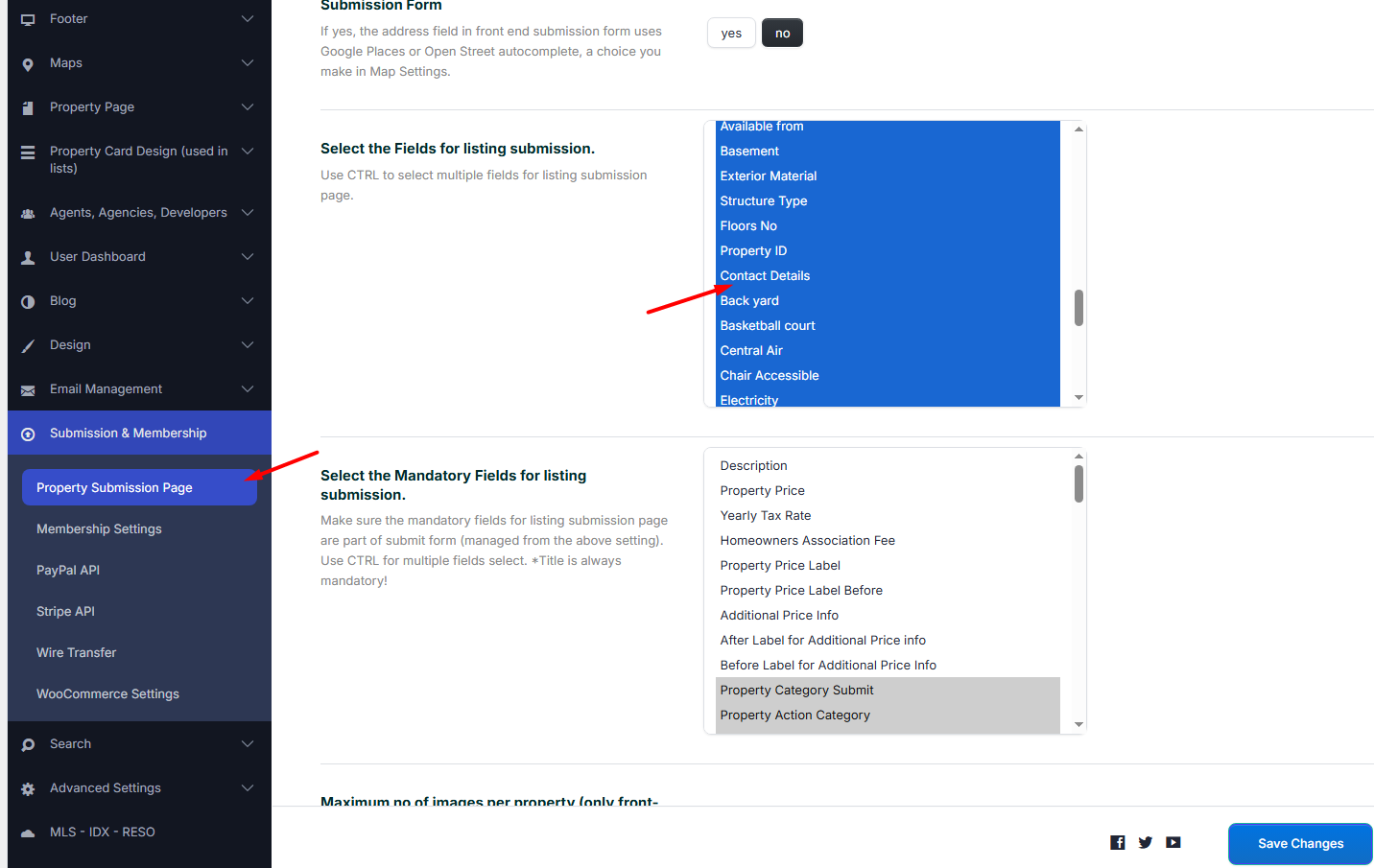
Creating a custom field does not automatically add it to the front-end property submission form.
To allow users to fill in custom fields when submitting or editing properties, you must enable them in the submission form configuration.
How to configure mandatory and optional fields in the submit form
How to add property custom fields to the advanced search form
Property custom fields can also be used as filters inside the Advanced Search form.
To do this correctly, you must configure:
- The custom field type
- The comparison logic
- The search position and label